Day: February 28, 2026

  • Civil vs. Criminal Litigation: Key Differences

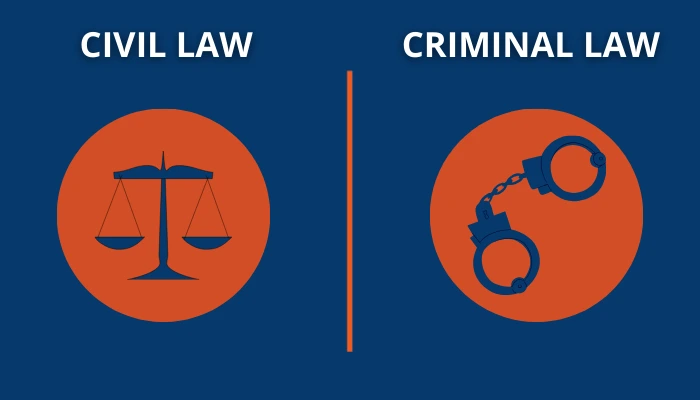
    Civil vs. Criminal Litigation: Key Differences

    In the U.S. legal system, litigation falls into two main categories: civil litigation and criminal litigation. While both use the court system, they serve different purposes, follow different procedures, and lead to distinct outcomes.

    Civil litigation resolves disputes between private parties, such as individuals, companies, or organizations. Criminal litigation involves the government prosecuting someone accused of breaking the law. Understanding the differences between civil and criminal law helps individuals, business owners, and anyone facing legal action navigate the litigation process more effectively.

    Who Initiates the Case

    • Civil litigation: A wronged party — the plaintiff — files a lawsuit against the defendant, seeking compensation or another legal or equitable remedy.
    • Criminal litigation: The state or federal government, through a prosecutor or district attorney, files charges against a defendant for alleged violations of criminal laws.

    Parties Involved

    • Civil cases: Both parties are generally private — individuals, organizations, or businesses (the government, whether federal, state, or local, can be a plaintiff or defendant in certain civil cases). Each side hires and pays for their own attorney.
    • Criminal cases: The government prosecutes the accused. Defendants who cannot afford legal representation have the right to a court-appointed public defender.

    Legal Goals

    • Civil litigation: Generally, seeks to compensate the plaintiff for harm or loss, restoring them to their prior position.
    • Criminal litigation: Aims to punish the offender and deter future criminal behavior.

    Standard of Proof

    • Civil cases: The standard of proof varies from case to case, such as cases involving fraud, lost wills in inheritance, or cases seeking punitive damages.
    • Criminal cases: The standard of proof that prosecutors must prove guilt varies, with beyond a reasonable doubt being the highest standard in law.

    Outcomes and Penalties

    • Civil litigation: May result in monetary damages, injunctions, or court-ordered actions.
    • Criminal litigation: Can lead to fines, probation, community service, or imprisonment.

    Constitutional Protections

    • Civil cases: Do not automatically grant rights like remaining silent or a jury trial unless specified by law.
    • Criminal cases: Defendants benefit from constitutional protections such as the right to remain silent, the right to an attorney, and protection against double jeopardy.

    Overlap Between Civil and Criminal Cases

    The same incident can sometimes lead to both types of cases. For example, a person accused of assault could face criminal prosecution from the state and a civil lawsuit from the victim for damages.

    Comparison Table: Civil vs. Criminal Litigation

    Feature Civil Litigation Criminal Litigation
    Initiated by Private party (plaintiff) Government (prosecutor)
    Parties Plaintiff vs. Defendant State vs. Defendant
    Goal Compensate victim, cause action or inaction Punish offender
    Standard of Proof Varies Varies
    Right to Attorney Hired privately Provided by the state if needed
    Possible Penalties Damages, injunctions, court orders Fines, probation, imprisonment
    Constitutional Protections Limited Extensive

    Bottom line: Civil and criminal litigation differ in purpose, process, and outcome. Knowing these distinctions can help you work effectively with your attorney and make informed decisions when facing any type of legal action. For legal guidance tailored to your situation, contact Apfelbaum Martinez Law.

  • Key Business Law Principles for Florida Startups

    Key Business Law Principles for Florida Startups

    Florida has become a prime destination for entrepreneurs launching new ventures. With its fast-growing economy, favorable tax climate, and diverse industries, the state offers fertile ground for innovation. However, more than half of startups fail due to preventable legal and structural issues.

    Understanding Florida business law and making informed legal decisions will protect your growth from day one.

    This guide walks you through the legal requirements for startups in Florida so you can build a solid foundation and focus on scaling your business.

    1. Choose the right business structure

    Your business structure affects taxes, liability, funding opportunities, and daily operations. In Florida, most startups consider these options:

    • Sole proprietorship: The simplest and least expensive option, requiring no formal registration with the state. However, you’ll have unlimited personal liability for all business debts and obligations, and you cannot raise capital by selling equity. Best for: Single-founder service businesses with minimal liability risk.
    • Partnership (General or Limited): Suitable for ventures with multiple founders who want to share profits, losses, and management responsibilities. Requires a comprehensive written partnership agreement defining ownership percentages, decision-making authority, profit distribution, and exit procedures. Note: General partners have unlimited personal liability. Best for: Professional services or family businesses with trusted co-founders.
    • Corporation (C-Corp or S-Corp): The preferred structure for high-growth startups seeking venture capital or planning to go public. Corporations offer strong liability protection, can issue multiple classes of stock, and provide clear governance structures. C-Corps face double taxation but have no restrictions on investors; S-Corps avoid double taxation but limit ownership to 100 shareholders. Best for: Scalable businesses targeting significant investment or eventual sale.
    • Limited Liability Company (LLC): Florida’s most popular startup structure, combining liability protection with operational flexibility and pass-through taxation. LLCs can have unlimited members, flexible profit-sharing arrangements, and simpler compliance requirements than corporations. However, they’re less suitable for raising venture capital. Best for: Small to medium businesses prioritizing flexibility and tax efficiency.

    💡 Tip: Work with a Florida business attorney to determine the structure that best fits your goals and long-term plans.

    2. Prepare strong legal documents from day one

    Clear, well-drafted documents reduce misunderstandings and legal disputes later. For startups in Florida, key documents include:

    • Articles of Incorporation or Organization: File with the Florida Department of State to legally establish your entity.
    • Bylaws or Operating Agreement: Establish comprehensive governance rules, decision-making processes, and operational procedures.
    • Founders’ Agreement: Define ownership shares, vesting schedules, roles and responsibilities, compensation structures, and exit clauses for each founder.

    3. Comply with Florida employment laws

    As you hire team members, follow state and federal labor regulations to avoid penalties:

    • Classify workers correctly as employees or independent contractors. Misclassification can result in significant penalties, back taxes, and benefit obligations.
    • Meet Florida’s minimum wage requirements and pay overtime when applicable.
    • Required documentation: Verify work eligibility using Form I-9, obtain workers’ compensation insurance (required for most employers with 4+ employees), and register for reemployment tax with the Florida Department of Revenue.
    • Draft enforceable non-compete agreements that are reasonable in geographic scope, duration, and protect legitimate business interests.

    4. Understand funding and investment regulations

    Raising capital in Florida requires understanding both state and federal laws:

      • Convertible notes and SAFE agreements: Common for early-stage funding but may dilute future equity.
      • Securities compliance: Required when offering stock or ownership interests to investors. Note: With some exceptions, any offer of stock or ownership interests may trigger securities regulations.
    • Investor verification: When raising from accredited investors, implement proper verification procedures and maintain detailed records of investor qualifications and communications.
    • Equity crowdfunding: Legal within Florida’s intrastate rules and a growing option for early-stage companies.

    5. Protect your intellectual property

    Your brand and innovations are among your most valuable assets. In Florida, you can safeguard them by:

    • Registering trademarks for your business name and logo. Consider both state and federal registration, and conduct thorough clearance searches before adopting new marks.
    • Applying for patents to protect unique inventions or processes.
    • Copyrighting creative works like software, marketing materials, or original content. While copyright exists upon creation, registration provides stronger legal protection and statutory damages.
    • Implement confidentiality agreements and assign IP ownership from all employees, contractors, and consultants. Maintain trade secret protection through proper access controls and documentation.
    • Secure relevant domain names early and monitor for trademark infringement across digital platforms.

    6. Plan for growth and possible exits

    From the start, consider how you want your business to grow and eventually transition:

    • Establish and maintain proper corporate governance.
    • Implement robust accounting systems with regular financial statements.
    • Keep accurate and up-to-date financial and legal records.
    • Secure intellectual property rights and make them transferable.
    • Structure agreements that allow smooth mergers, acquisitions, or ownership changes.
    • Partner with a business accountant or tax advisors to ensure tax optimization.

    7. Partner with an experienced Florida business attorney

    A business attorney in Florida can help you choose the right entity, draft tailored contracts, ensure compliance, and guide strategic decisions. This professional support frees you to focus on innovation and scaling your startup.

    Bottom line: Launching a startup in Florida brings exciting opportunities, but legal missteps can derail your progress. By understanding the legal requirements for startups in Florida and partnering with the right professionals, you set your venture up for sustainable growth.

    Contact us at Apfelbaum Martinez Law to receive guidance tailored to your specific situation.