Author: Apfelbaum Martinez Law

  • What is probation?

    What is probation?

    Probation is a sentencing option designed as an alternative to incarceration for individuals convicted of crimes. Under probation, offenders are allowed to serve their sentences in the community under the supervision of a probation officer. This arrangement aims to promote rehabilitation while ensuring accountability for their actions.

    During probation, individuals must adhere to specific conditions set by the court, which typically include attending regular meetings with a probation officer, maintaining employment or attending school, abstaining from drugs and alcohol, participating in rehabilitation programs, paying court ordered restitution to any victim of their crime, and obeying all laws. The conditions vary depending on the offense and the individual’s circumstances. Probation officers closely monitor the offender’s progress to promote positive behavioral changes and reduce the risk of reoffending.

    Types of probation

    There are two main categories of probation: supervised and unsupervised, also known as administrative probation

    Supervised probation

    This is by far the most common type of probation. The offender is assigned a probation officer who monitors their progress and enforces the court-ordered conditions. These conditions may include:

    • Regular meetings with the probation officer
    • Community service
    • Mental health or substance abuse treatment
    • Curfews
    • Prohibition on consuming alcohol or drugs
    • Paying restitution to victims
    • Wearing an electronic monitoring device

    Administrative probation

    This type of probation involves fewer restrictions. The offender does not have to meet with a probation officer regularly, but they are still expected to follow the law conditions and stay out of trouble. Unsupervised probation is only rarely offered and is usually only offered to Defendants who do not need to complete any additional sanctions, and whose residence or employment make supervision unfeasible.

    What Happens if Probation Is Violated? 

    In Florida, violating probation carries significant repercussions.  In the event of a violation, individuals may face a court hearing where evidence is presented regarding the infraction. Depending on the severity of the violation, the judge may decide to modify the probation terms, impose additional conditions, or revoke probation altogether. 

    If probation is revoked, the individual could be required to serve the remainder of their original sentence in jail or prison, with any time previously spent on probation potentially not counting towards their incarcerative sentence. While alternatives like community service or substance abuse treatment may be considered, adherence to probation rules is paramount to avoid further legal consequences and maintain personal freedom in Florida’s justice system.

    Needing an attorney to assist with probation violations

    Being accused of breaking probation rules can be a stressful situation.  If you find yourself facing this,  Apfelbaum Law can help.  We offer consultations to discuss your options and guide you through the process.  Located in Port St. Lucie and Stuart, we serve clients throughout the Treasure Coast and Florida.
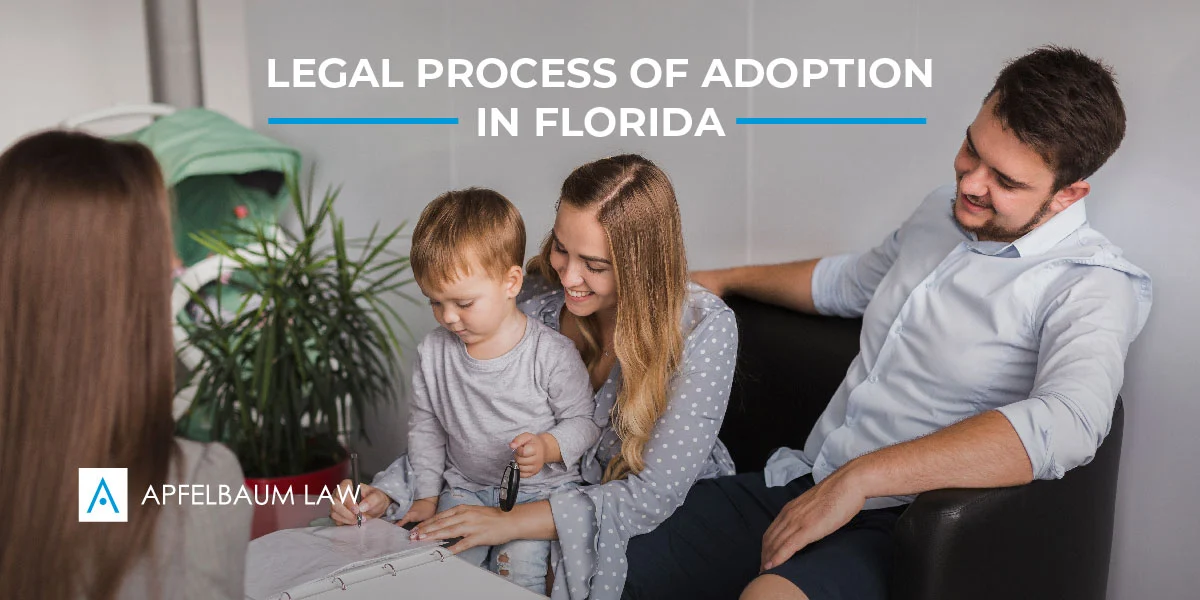

     

  • How to adopt a child in Florida? The legal process

    How to adopt a child in Florida? The legal process

    Adopting a child in Florida is a significant decision that can bring joy and fulfillment to both adoptive parents and the child. The process is guided by a thorough legal framework to ensure the well-being of the child while facilitating the transition into a loving and supportive family environment. 

    However, the intricacies of adoption law in Florida can seem overwhelming, from understanding different types of adoption to fulfilling legal requirements and completing necessary paperwork. Having a qualified Florida adoption lawyer on your side may be of great help.

    Types of adoptions

    There are many paths a family can follow to grow through adoption, and the type of adoption you choose can impact your journey. Here’s a breakdown of some common types with some additional details:

    Domestic adoption 

    This happens when you adopt a child from within the U.S. There are three main ways this can be done:

    • Foster Care Adoption: Involving adopting children in the foster care system, who are under the care of the state. 
    • Infant Adoption: Adopting a newborn or young child placed for adoption by their birth parents. This can be done through private adoption with an adoption attorney or through a public adoption agency. Private adoptions can be faster but also tend to be more expensive. Public adoptions are typically more affordable but may involve a longer wait time.
    • Relative Adoption: A child is adopted by a family member, such as grandparents, aunts, or uncles. This can be a great option for children who need stability and a connection to their family history. 

    International Adoption

    It involves adopting a child from another country. This process can be complex and have specific requirements that vary by country. It’s important to work with a qualified adoption professional who specializes in international adoption to ensure a smooth process.

    Stepparent Adoption

    If you’re married to a child’s biological parent, you can adopt your stepchild. This can provide legal security for the child and strengthen your family bond.

    Adult Adoption 

    This creates a legal parent-child relationship between an adult and another adult. Adult adoption may be done for various reasons, such as to solidify an existing parental relationship or to allow inheritance rights.

    Who is eligible to adopt a child in Florida? (H2)

    In Florida, eligibility to adopt a child is determined by several factors outlined within state law. While the primary focus is on the best interests of the child, prospective adoptive parents must meet certain criteria to be considered suitable for adoption. Here’s a closer look at who is eligible to adopt a child in Florida:

    1. Age Requirement: Prospective adoptive parents must be at least 18 years old. 
    2. Marital Status: Florida allows adoption for both married couples and single individuals, with no requirement for marriage. Married couples must adopt jointly unless one spouse is legally incapacitated or the court determines it is in the child’s best interest to waive this requirement. 
    3. Legal Capacity: Prospective adoptive parents must have the legal capacity to adopt. 
    4. Financial Stability: While there is no specific income requirement, prospective adoptive parents must demonstrate financial stability and the ability to provide for the child’s needs. 
    5. Physical and Mental Health: Prospective adoptive parents must be physically and mentally capable of caring for a child. This may involve undergoing medical examinations or providing documentation of good physical and mental health.
    6. Criminal Background Check: All prospective adoptive parents must undergo a criminal background check to ensure they do not have a history of any criminal offenses that would disqualify them from adoption.
    7. Home Study Evaluation: As part of the adoption process, prospective adoptive parents must undergo a home study evaluation conducted by a licensed child-placing agency or a qualified social worker. 
    8. Parenting Experience and Support: While prior parenting experience is not necessarily required, prospective adoptive parents should demonstrate a genuine commitment to parenting and be willing to participate in pre-adoption training and support services.

    What is the Home Study Process to adopt a child in Florida?

    The Florida home study is a crucial step for adoptive families in the Sunshine State, ensuring they have the resources and stability to raise a child. The process involves partnering with a licensed adoption professional, gathering documents, conducting in-depth interviews, and scheduling a home visit to assess safety and suitability. To ensure a child’s well-being, background checks for all adults in the household are mandatory.

    Finally, most providers require adoptive parents to complete adoption education. These courses equip them with information about child development, different adoption types, and the impact adoption has on children. Adopting parents will be one big step closer to welcoming their child once the home study has been completed and approved by the relevant adoption authorities.

    How much does it cost to adopt a child in Florida?

    Adopting in Florida can vary significantly depending on the path you take.  Here’s a quick cost rundown:

    • Foster care adoption: This is often very affordable, with minimal fees and some state support for things like home study prep.
    • Private domestic infant adoption: This can range from $20,000 to $40,000, with expenses like agency fees, legal representation, and miscellaneous costs.
    • International adoption: This can be even more expensive due to travel, translation services, and additional legal requirements, potentially reaching into the higher tens of thousands.

    Seeking an Adoption Attorney

    Should you require support with the adoption process, whether it involves adopting a child or considering placing a child for adoption, or if you have inquiries regarding any legal concerns, we encourage you to reach out to Apfelbaum Law for a confidential consultation. Our firm operates from offices located in Port St. Lucie and Stuart, while extending our legal services across the Treasure Coast and throughout the state of Florida.

  • What is a Civil Attorney and what do they do?

    What is a Civil Attorney and what do they do?

    Civil attorneys play a crucial role in the legal landscape, serving as advocates and advisors for individuals and organizations, navigating complex legal matters outside the area of criminal law. Their expertise encompasses a wide array of civil transactional matters and civil disputes, ranging from personal injury cases to contract disputes, and everything in between. 

    Understanding the role and responsibilities of a civil attorney is essential for anyone seeking legal representation, or simply trying to comprehend the intricacies of civil law. In this text, we will delve into the diverse functions and duties of civil attorneys, shedding light on their indispensable contributions to the legal system.

    What is a civil lawyer?

    In contrast to criminal law, which deals with offenses against the state and potential punishments, civil law focuses on handling civil matters, as well as resolving civil disputes, between individuals or organizations. In these cases, a civil lawyer, known as a civil litigator if dealing with a civil dispute, is a legal professional who specializes in handling non-criminal legal matters. 

    Civil attorneys play a crucial role in representing clients in various legal proceedings, advocating for their rights and interests in matters such as personal injury claims, contract disputes, employment disputes, property disputes, and more. 

    Types of civil lawyers

    Civil law has seen the emergence of numerous specializations as a result of the diversity of civil conflicts. The following are types of civil attorneys you may run into:

    Personal Injury Attorneys: Handle cases involving physical or emotional harm caused by another party’s negligence, such as car accidents, medical malpractice, or product liability.

    Family Law Attorneys: Assist with divorce, child custody, adoption, and other family-related legal matters.

    Employment Law Attorneys: Represent employees in disputes with their employers regarding wrongful termination, discrimination, or unpaid wages.

    Contract Law Attorneys: Deal with breaches of contract, ensuring your rights are protected in business agreements.

    Real Estate Law Attorneys: Guide you through buying, selling, or renting property, addressing legal issues like title disputes or landlord-tenant conflicts.

    Estate Planning Attorneys: Create wills, trusts, and other documents to manage your assets and ensure your wishes are respected after your passing.

    What does a civil lawyer do? 

    Their primary focus is on resolving disputes between individuals, organizations, or entities through negotiation, mediation, arbitration, or litigation in civil court. 

    They represent one party in a dispute, known as the plaintiff, who seeks compensation or a specific outcome from the other party, the defendant. Here’s how they help:

    • Legal Guidance: They possess deep knowledge of relevant laws and procedures, explaining your rights, options, and the legal landscape surrounding your case.
    • Negotiation Power: They act as your voice, negotiating for a favorable settlement outside of court, saving you time and money.
    • Courtroom Representation: If negotiations fail, they present your case in court, arguing your position and protecting your interests.
    • Legal Documentation: They handle the drafting of claims, responses, and other essential legal documents.

    Why hire a civil lawyer? 

    The benefits of hiring a civil lawyer are numerous:

    • Unique Insights and Perspectives: Civil lawyers bring a fresh set of eyes to legal issues, offering unique insights and perspectives that clients might not have considered. 
    • Strategic Guidance: Whether it’s negotiating a settlement, mediating a dispute, or litigating in court, civil lawyers provide valuable guidance and direction to achieve the best possible outcome for their clients.
    • Access to Resources: Attorneys use a variety of resources, such as expert witnesses, professional networks, and research databases, in order to strengthen their positions, compile evidence, and create strong legal arguments or defenses.

    If you’re facing a civil dispute in Florida, consider seeking a civil lawyer at Apfelbaum Law. Our experienced attorneys offer a wide range of legal services. Contact us for a consultation.

  • Florida Legal Services: Explaining the Defend Trade Secrets Act of 2016

    Florida Legal Services: Explaining the Defend Trade Secrets Act of 2016

    Are you aware of the powerful tools at your disposal to safeguard your company’s intellectual property? If not, you’re not alone. Many businesses find themselves in hot water when it comes to protecting their trade secrets. But don’t fear—understanding the Defend Trade Secrets Act of 2016 (DTSA) may be the key to guaranteeing the safety of your company’s assets.

    What is the Defend Trade Secrets Act? 

    The DTSA is a federal law that safeguards trade secrets from misuse, imposing civil and criminal penalties for theft or misuse. It also offers a safe harbor for employees who disclose trade secrets to government officials or attorneys in order to report suspected violations of the law.

    One of the most significant aspects of the DTSA is its retroactive applicability. It allows businesses to seek legal recourse even if misappropriation occurred before its 2016 enactment, providing peace of mind by allowing them to address past injustices and ensuring that they have a tool to address such issues.

    Understanding Trade Secrets and Misappropriation

    What is a trade secret?

    A trade secret is any information that is not generally known or readily ascertainable by the public and gives a business a competitive advantage. Trade secrets can include things like customer lists, marketing plans, product formulas, and software code.

    What about misappropriation?

    Misappropriation, on the other hand, refers to the unauthorized acquisition, use, or disclosure of these trade secrets.

    It’s a serious offense that can have severe consequences for businesses. It occurs when someone unlawfully acquires, uses, or discloses confidential information that belongs to another party. 

    What are the key provisions of the DTSA? 

    The DTSA includes the following key provisions:

    • A civil cause of action for trade secret misappropriation: This allows companies to sue for damages and get an injunction against those who violate their trade secrets.
    • Ex parte seizure of misappropriated trade secrets: This allows businesses to seize their trade secrets from the person who misappropriated them, even before a lawsuit is filed.
    • Whistleblower protection: This protects employees who disclose trade secrets to government officials or attorneys in order to report suspected violations of the law.

    Seeking Legal Counsel: Your Best Defense

    While understanding the DTSA is crucial, navigating its complexities can be daunting without proper guidance. This is where the expertise of a Florida business lawyer becomes invaluable. An experienced attorney can help you understand the intricacies of the DTSA, assess your legal options, and chart a course of action that best protects your interests.

    The Florida business lawyers at Apfelbaum Law can help you protect your trade secrets by:

    • Drafting and reviewing employment agreements, non-compete agreements, and non-disclosure agreements to include the provisions of the DTSA.
    • Advising you on how to implement the DTSA in your business.
    • Representing you in court if you get involved in a trade secret dispute.

    Contact us today to learn more about how we can help you protect your trade secrets.

  • Agreement vs Contract: What’s the difference?

    Agreement vs Contract: What’s the difference?

    Contracts and agreements are essential in our personal and professional lives, serving as pillars of understanding and commitment. They may seem interchangeable at first glance, but deeper exploration reveals nuances that distinguish them.

    This exploration delves into the difference between agreements and contracts, examining their significance, formation, and implications in various contexts. It explores verbal promises and written obligations, highlighting the fascinating interplay between agreement and contract.

    Difference between contract and agreement 

    Contract definition

    Life is full of promises, but not all of them are created equal. When it comes to serious commitments, you need the added security of a contract. But what is a contract?

    Think of a contract as a formal, legally binding agreement between two or more parties. It’s like a detailed roadmap outlining your expectations, responsibilities, and potential consequences. This clarity helps avoid misunderstandings and ensures everyone plays by the same rules.

    At its core, a contract consists of several essential elements:

    • Offer: The initial proposal or promise made by one party to another. This sets the foundation for the agreement and defines what is being offered.
    • Acceptance: An essential element of a contract is the other party’s acceptance of the offer; which is a step closer to having both parties obligated to fulfill their respective responsibilities.
    • Consideration: Something of value—cash, products, services, or promises—that is traded between the parties. Consideration is what distinguishes a contract from a gift or a unilateral promise.
    • Mutual Intent: Both parties must enter into the contract with the intention to create legal obligations. This ensures that the agreement is not based on coercion or misunderstanding.
    • Capacity: Each party must have the legal capacity to enter into the contract. This means they must be of sound mind and legal age, and not under the influence of duress or undue influence.
    • Legality: The purpose and subject matter of the contract must be legal. Contracts that involve illegal activities, signed solely by minors, or matters that go against public policy may not be enforceable.

    Remember: While some simple agreements don’t necessarily require a formal contract, it’s always safer to have it in writing when significant commitments are involved. Consulting a lawyer for complex contracts is wise.

    Agreement definition

    But now, what exactly is an agreement and how does it differ from a contract?

    An agreement is a mutual understanding or arrangement reached between two or more parties where they come to a consensus on a particular matter. Unlike contracts, agreements may not always have the formalities or legal bindings associated with them, but they still hold significant weight in establishing expectations and commitments.

    At its essence, an agreement embodies the following key elements:

    • Mutual Understanding: There’s a shared intention, a basic level of agreement on what will happen or be done. Imagine two friends agreeing to meet for coffee – simple, yet crucial.
    • No Formalities: Agreements can be verbal, written, or even implied through actions. There is no need for signatures or lawyerly jargon, just a clear understanding.
    • Flexibility: Agreements are often adaptable and can evolve as circumstances change. Unlike contracts, they don’t always require strict adherence.

    Comparison chart: Agreement vs Contract 

    Feature Agreement Contract
    Legally Binding No Yes
    Formality Can be informal (verbal, implied) Usually formal (written)
    Enforceability Cannot be enforced in court Enforceable in court
    Specificity Less specific, broad understanding Highly specific, detailed terms
    Consideration Not always required Required (exchange of value)
    Dispute Resolution Informal negotiation Defined process, may involve legal action
    Examples Sharing a meal, verbal promise, social norms Employment agreement, lease, sales contract, prenuptial agreement
    Purpose Establish basic understanding, build trust Clearly define rights and obligations, protect interests

    Types of agreements and contracts

    Types of contracts

    Here are five highly common and widely applicable types of contracts you’ll likely encounter:

    1. Employment Contract
    2. Service Contract
    3. Sales Contract
    4. Lease Agreement
    5. Non-Disclosure Agreement (NDA).

    Types of agreements 

    Here are five highly common and widely applicable agreements you’ll likely encounter:

    1. Verbal Agreements
    2. Written Agreements
    3. Express Agreements
    4. Implied Agreements
    5. Unilateral Agreements

    Who can assist me in writing contracts and agreements? 

    In summary, understanding the distinction between agreement and contract is crucial for your company’s success and protection in Florida. Don’t wait until disagreements escalate into legal disputes; seek legal guidance promptly.

    At Apfelbaum Law, we specialize in guiding you through the intricacies of agreements and contracts in Florida. Whether you’re drafting contracts or resolving disputes, our team is here to assist you every step of the way. If you have inquiries or require legal counsel, don’t hesitate to reach out to us!

  • What are Criminal Offenses?

    What are Criminal Offenses?

    “Criminal Offenses” are offenses punishable by some amount of incarceration, in addition to fines and other penalties. Conversely, “infractions” are offenses punishable by fines, community service and restriction of other privileges and other penalties, but not incarceration.

    In Florida, crimes are divided into misdemeanors and felonies. Misdemeanors are less serious, with lesser potential punishment. With limited exceptions, second degree misdemeanors are punishable by incarceration up to 60 days in the county jail, and first degree misdemeanors are punishable by up to one year in the county jail. Examples included petit theft (value less than $750), simple assault, simple battery, disorderly conduct, driving under the influence, driving without a license with knowledge, and criminal mischief.

    Felonies are more serious, with more serious punishment. With limited exceptions, the least serious are third degree felonies, punishable by up to five years in state prison and the most serious are felonies punishable by life in prison or imposition of the death penalty. Examples of the most commonly charged felonies are grand theft, burglary, robbery, drug trafficking, and more serious batteries.

    However, convictions for any level of crime can have long-term impacts, such as difficulty obtaining employment or housing, suspension of driver’s license, and immigration consequences. 

    The classification of crimes as misdemeanors varies by jurisdiction, with different states and countries having their own statutes and definitions.

    Misdemeanors vs Felony: What’s the difference? 

    This table clarifies the key differences between a misdemeanor and a felony, providing a quick reference for punishment, lasting impacts, and legal procedures.

    Feature Misdemeanor Felony
    Severity Less serious More serious
    Punishment Up to 1 year in jail, fines, community service Over 1 year in jail, hefty fines, potential loss of rights
    Common examples Petty theft (value under $750), disorderly conduct, traffic violations Major theft, arson, drug trafficking
    Lasting impacts Can affect employment, housing, voting rights Significant social and economic challenges
    Trial complexity Simpler procedures, generally simpler trials Complex legal processes, more complicated sentencing considerations

    Examples of Misdemeanors

    Misdemeanors exist in the space between minor infractions and serious felonies. Understanding the types of offenses classified as misdemeanors can help you navigate life’s curveballs and avoid unintended consequences.

    •   Petit theft: walking out of a store with an unpaid item worth less than $750.00 may land you in this category.
    •   Simple battery: An argument that escalates to minor pushing or shoving without serious injury falls under this umbrella.
    •   Disorderly conduct: Being a little too loud and disruptive at a concert or engaging in public intoxication can be considered disorderly conduct.
    •   Trespassing: wandering onto private property or lingering where you’re not welcome, like an abandoned building, may qualify as trespassing.

    Traffic blunders 

    • Reckless driving: Exceeding the speed limit by a significant margin or engaging in dangerous maneuvers may put you in this territory.
    • Driving under the influence (DUI): Operating a vehicle while under the influence with alcohol or drugs carries serious consequences, even for first-time offenders.
    • Driving without a license or insurance: These lapses in documentation may result in misdemeanor charges.

    Other situations

    • Operating a vehicle while under the influence with alcohol or drugs carries serious consequences, even for first-time offenders.
    • Possession of small amounts of illegal substances: Depending on the state and specific substance, having a small quantity of marijuana or other drugs could be classified as a misdemeanor.

    How long does a Criminal Offense stay on your record? 

    Criminal convictions do not automatically disappear from your record. However,  sealing or Expungement options exist in Florida, depending on the offense, criminal history of the defendant, and outcome of the case.

    Moreover, most Florida jurisdictions have the opportunity for alternative sentencing options, depending on the nature of the offence and criminal history of the defendant, including diversionary courts for defenseman’s with substance abuse or mental health issues.

    Seeking an experienced misdemeanor lawyer is essential to navigating these options effectively and understanding the potential implications of criminal conviction on one’s record.

    Get help from a Criminal Defense Lawyer 

    If you require a criminal defense lawyer for your case or have inquiries about any legal concerns, feel free to reach out to Apfelbaum Law for a consultation. 

    Our firm is conveniently located in Port St. Lucie and Stuart, yet we extend our legal services across the entirety of the Treasure Coast and the state of Florida.

  • Understanding Your Defense Against Criminal Charges in Florida

    Understanding Your Defense Against Criminal Charges in Florida

    Are you facing criminal charges and unsure about how to protect your rights? In this article, we’ll discuss some common legal strategies that may be essential in your defense against criminal charges in Florida.

    Common Legal Strategies 

    Common Defense Strategies (Informative)

    In Florida, the elements and severity of criminal offenses are defined by state statute and county/municipal ordinance. The State of Florida, as the prosecuting party, has the burden to prove criminal charges beyond all reasonable doubt. Any effective criminal defense consists of both reviewing the evidence of the case produced by the State and developing evidence to support defense theories. Well-established legal strategies can include the following:

    • Challenging evidence validity: Examining the legitimacy of the evidence, assessing the impact of bias on the investigation and witness testimony, and considering other interpretations of evidence will help expose flaws in the prosecution’s case. 
    • Procedural errors and charge dismissal: Identifying procedural errors during the arrest, evidence gathering, or legal document filing can lead to the dismissal of charges. It’s essential to understand how these errors can impact your case. 
    • Assessing affirmative defenses: effective client communication will identify the viability of affirmative defenses including self-defense, necessity, alibi, insanity, and entrapment.

    In conclusion, retaining counsel with the experience to effectively implement these legal strategies is essential to defending against criminal accusations in Florida. By challenging evidence and identifying procedural errors, professionals may build a strong defense for their clients. If you find yourself facing such charges, consulting with a criminal attorney  is crucial to help you navigate the legal landscape effectively. Reach out to us for a consultation.

  • Paternity Issues: Disestablishment of Paternity in Florida

    Paternity Issues: Disestablishment of Paternity in Florida

    The disestablishment of paternity is a multi stage process in Florida family law. The concept of legal paternity plays a central role in shaping parental rights, responsibilities, and financial obligations. However, individuals may find themselves at a certain point questioning or trying to redefine these ties. Florida’s legal system provides clarity in such situations, allowing individuals to address uncertainties surrounding paternity.

    This article provides an overview of the process, which begins with a petition to disestablish paternity. It touches on the complexities involved. It provides insights and guidance for those seeking to navigate this process within Florida’s legal framework, highlighting the importance of followng all aspects of the procedure to hopefuly obtain the desired result.

    What is the disestablishment of paternity process?

    When doubts emerge about the biological relationship between a legal father and a child, one legal option is the “disestablishment of paternity” process. Through this procedure, people can ask a court to remove their status as the legal parent of a child.

    The beginning of the disestablishing process

    In Florida, paternity disestablishment proceedings begin with a action filed in appropriate family court, often due to new evidence (such as DNA testing) or the acknowledgment that paternity was established under duress, fraud, or other circumstances. However, a petition to disestablish paternity does not automatically relieve an individual of the statuts of la legal parent, including existing child support obligations. The court will evaluate each case based on its merits, considering the circumstances surrounding the petition and the potential impact on the child’s best interest if the petition were to be granted.

    Paternity Issues: Legal vs Biological Father

    In Florida, understanding this distinction is crucial, as it determines a man’s rights and responsibilities towards a child.

    The biological father, simply put, is the man who provided the DNA necessary for conception. The legal father, however, holds the legal mantle of fatherhood, possessing all the rights and responsibilities that come with it, regardless of biological ties. This legal connection can be established through marriage, adoption, or a court order.

    Legal Father

    Biological Father

    ● Assumes legal mantle of fatherhood.

    ● Rights and responsibilities established through marriage, adoption, or court order.

    ● Can’t disestablish paternity if knowingly embraced, even if relinquishing parental rights.

    ● Limited possibility for disestablishment if unknowingly tricked into becoming a legal father, subject to certain conditions.

    ● Contributes DNA for conception.

    ● Biological ties determine parentage.

    ● Can file a paternity action to establish rights.

    An interesting twist: If a woman is married at the child’s birth, her husband, even if not the biological father, is automatically presumed to be the legal father. This presumption holds even if the marriage occurred after the child’s conception or if the wife had an affair. The law prioritizes stability and continuity for the child.

    It may be intimidating to navigate these legal complexities. It is crucial that you get legal counsel from a Florida family law attorney if you find yourself dealing with a similar situation.

    Reasons a Petition May Be Denied under Florida Family Law

    Several factors can prevent a legal father’s disestablishment of paternity petition, even if they meet specific requirements like presenting new evidence and maintaining child support payments. While legal grounds may exist, petitions can be denied under certain circumstances:

    • Establishing Parental Role: If the legal father married the child’s mother and actively presented himself as their biological parent, the court may view disestablishment as detrimental to the child’s established family dynamic.
    • Prior Acknowledgment: Previously swearing to paternity through legal declarations or documents.
    • Official Recognition: Allowing oneself to be named on the child’s birth certificate or signing voluntary paternity statements.

    • Defying Court Orders: Disregarding a court-ordered genetic test, crucial for determining biological parentage.

    What can I do if my petition to disestablish paternity is denied and where can I find a family law attorney?

    In cases where deception led the legal father to believe he was the biological parent, disestablishment may still be possible with supportive evidence. However, navigating this complex legal situation requires expert guidance. Consulting a Florida family law or divorce attorney at Apfelbaum Law is crucial to determining if filing a disestablishment petition is the best course of action. Before your consultation, gather any relevant paperwork related to paternity and child support payments to facilitate clear and informed discussions.

    Click here to find out about all the family law practice areas our lawyers can help you with.

  • Do You Need an Operating Agreement for a Limited Liability Company (LLC)  in Florida?

    Do You Need an Operating Agreement for a Limited Liability Company (LLC) in Florida?

    Protect your business and avoid pitfalls with a well-drafted agreement

    Although it’s not legally mandatory, an operating agreement is an essential investment in the security and success of your Florida LLC. In this blog, we’ll analyze the importance of this agreement and how it can protect your business.

    What is an Operating Agreement?

    Think of it as a blueprint for your LLC’s internal operations. This personalized contract establishes the guidelines for how your company will operate, including important topics such as:

    • Member Roles and Responsibilities: Owners of an LLC are called members.  An operating agreement specifies each member’s management responsibilities, profit-sharing, and voting rights.
    • Decision-Making Processes: Describes who will make important decisions and how.
    • Financial Management: Lays out guidelines for bookkeeping, accounting, and profit and loss sharing.
    • Member Withdrawal and Buyout: Sets guidelines for members leaving the LLC and how to transition their ownership.
    • Conflict Resolution: Provides a framework for resolving disputes between members or with the LLC itself.

    Why is an Operating Agreement Crucial for Your Florida LLC?

    1. Avoid Default Rules: 

    Without a contract, your LLC operates under general state laws that might not be suitable for your particular requirements. Confusion, misunderstandings, and even legal conflicts may result from this.

    1. Clarity and Certainty: 

    A well-written operating agreement provides transparency and predictability for all parties. It makes sure that everyone’s rights and obligations are well-defined and removes any uncertainty.

    1. Protect Limited Liability Status: 

    A strong operating agreement strengthens your LLC‘s limited liability shield. It serves as legal evidence in court, documenting your internal structure and demonstrating compliance with regulations.

    1. Tailor-Made for your Business: 

    An agreement, as opposed to generic state regulations, can be tailored to your particular business model, needs, and goals.

    1. Enhance Professional Image: 

    Having a written agreement demonstrates your professionalism and commitment to good governance. By doing this, you may increase your credibility and draw in lenders, investors, and business associates; some of which may require the existence of an operating agreement.

    Beyond the Basics:

    Florida’s statutes provide additional flexibility for your Operating Agreement.

    You can:

    • Limit the ability to appraise particular transactions, such as asset sales or mergers.
    • Set standards for good faith and fair dealing obligations between members and the LLC.
    • Address specific voting requirements for important decisions.
    • Limit transferability of membership interests if one of the members wants to sell their interest, or if one of the members passes away.

    Read here about a Step-by-Step Guide to Getting your Business Registered in Florida.

    How do I find a Business Attorney near me?

    An effective operating agreement is crucial for a Florida LLC’s success. Consulting a qualified lawyer ensures your agreement is comprehensive, complies with state regulations, and protects your interests. Invest in a well-written agreement to optimize your business’s future and ensure your Florida LLC is set on the path to success.

    In conclusion, understanding the highlights of working with a business lawyer in Florida to protect your LLC is of great importance. While this guide provides an overview, seeking legal counsel from professionals like Apfelbaum Law ensures compliance and sets a strong foundation for your business. Get a consultation by clicking here.

  • Florida Misdemeanor Warrantless Arrests in 2024

    Florida Misdemeanor Warrantless Arrests in 2024

    If you are charged with a misdemeanor in Florida without a warrant, one of the questions an experienced criminal attorney can help determine is if one of the warrantless exceptions to such an arrest applies in your case.

    In most situations, law enforcement needs an arrest warrant before taking someone into custody for a misdemeanor offenseHowever, there are three regulated exceptions to this.

    When are Florida misdemeanor exceptions applicable?

    1. When all of the elements of the misdemeanor were committed in the officer’s presence. For example, if an officer witnesses a driver swerving recklessly all over the road, they may pull the car over. If they find evidence that the driver is intoxicated, they may make a warrantless arrest for a misdemeanor DUI charge.
    2. When the officer has probable cause for the arrest and the misdemeanor is on the list of statutory exceptions found in Section 901.15 of the Florida statutes. We’ll discuss some of them later in this article.
    3. When the officer has reasonable grounds to believe that the subject has violated probation (either misdemeanor probation or felony probation) or community control in any material respect.

    In any of these situations, officers can make a warrantless arrest. Otherwise, they are required to have a valid arrest warrant. 

    Misdemeanor Exceptions list

    Although the list is too long to be discussed in detail, here are some common exceptions:

    • Battery. 
    • Assault on any specified person who is lawfully performing their duties (usually a police officer, firefighter, EMT or public transit employee)
    • Child abuse or neglect
    • Concealed weapon offenses
    • Criminal mischief or vandalism
    • Disorderly conduct on the premises of a licensed establishment 
    • Domestic violence (consent of the victim or consideration of the parties’ relationship is not required)
    • Drugs (usually possession of 20 grams or less of marijuana)
    • Graffiti
    • Loitering and prowling
    • Order of protection (foreign protection orders)
    • Possession of a weapon by a specified person (a person who is subject to a domestic violence injunction)
    • Sexual cyberharassment (“revenge porn”)
    • Stalking
    • Airport trespassing (involving trespassing in restricted areas of the airport with clearly posted signs marking them as such)
    • School trespassing
    • Traffic crimes (usually involving an accident or DUI)
    • Theft
    • Vessel safety crimes (typically a violation of a safety zone, security zone, or naval protection zone)
    • Violation of domestic violence pretrial release (having violated the conditions of pretrial release, which often involve staying away from the victim)
    • Violation of a domestic violence protection order injunction
    • Other protective injunction violations
    • Racing on highways

    Scenarios where Florida misdemeanor exceptions are enforced 

    Florida’s misdemeanor exceptions are designed to allow law enforcement to take immediate action in situations where public safety is at risk or where there is a significant chance of further harm. These exceptions permit warrantless arrests under specific conditions that are critical to maintaining order and ensuring justice. 

    • Imminent Threat to Public Safety: Officers can make a warrantless arrest when someone’s actions pose an immediate danger to others, such as in cases of DUI or reckless behavior.
    • Risk of Escalation: If a situation could quickly worsen or lead to further harm, law enforcement is allowed to intervene immediately without a warrant.
    • Evidence of Criminal Activity: When substantial evidence indicates a crime, like domestic violence or disorderly conduct, officers can act quickly to preserve evidence and address the situation.


    Understanding these exceptions is crucial for both the public and law enforcement, as they highlight the conditions under which warrantless arrests are legally justified. This knowledge ensures that while the law is enforced effectively, individual rights are also protected, maintaining a balance between public safety and civil liberties.

    Important Considerations

    • Remember that the officer still needs probable cause to make an arrest, so even if your charge fits into this list, there are strategies an experienced Florida criminal defense attorney may be able to use to help you. For instance, often, when clients reach out to us, we can investigate the circumstances of the arrest. In some cases, your attorney may be able to get the charges dismissed if proper procedure wasn’t followed.
    • There are also detailed specifications for each exception. For example, most DUI arrests are warrantless, but there are specific grounds for exception. An officer needs to personally witness every element of the crime. Your attorney will ask you questions and examine the evidence to ensure proper procedure was in fact followed.

    To Keep In Mind

    • In the latter exception, the other party needs to be an actual law enforcement officer, not an average citizen (a security guard or store clerk). Otherwise, their testimony isn’t probable cause for a warrantless arrest.
    • The police officer rule mentioned above also allows an officer to make an arrest outside of their jurisdiction if they observe a crime being committed in their own jurisdiction. Many times, they will make an arrest with an officer who does have jurisdiction in this area.
    • In a situation where an accident occurs, an officer may make a warrantless arrest if they have probable cause to believe one of the drivers involved was intoxicated and that this intoxication contributed to the accident. Usually this relies on the arresting officer’s report, which will include observations of the defendant’s actions and demeanor, and any reasons they had to believe this person was under the influence (slurring speech, red eyes, poor coordination, smelling of alcohol, etc.).
    • Traffic crashes in general allow an officer to make a warrantless arrest if they have reason enough to believe the person committed a traffic crime under chapters 316 or 322 of the Florida Statutes. This is the case even if there was no damage caused by the crash or if the person arrested only damaged their own car.

    Keep in mind that just because an officer has probable cause for an arrest does not necessarily mean you would be convicted at your trial. Even if the arrest was legal, there could be many other problems with evidence or other circumstances in your case that your attorney can use in your defense.

    Charged with a misdemeanor in Florida? Contact us!

    If you think you were the victim of a warrantless arrest that doesn’t fit into or meet all the requirements for a misdemeanor exception category, speak with one of our experienced Florida criminal defense attorneys for further assistance.

    In that case, your attorney can file a motion to suppress any evidence collected as a result of this arrest. Often, this may force the prosecution to drop the charges entirely.


    If you need assistance with your misdemeanor case or have questions about any potential legal matter, please contact Apfelbaum Law for a consultation.

    We have offices in Port St. Lucie and Stuart but provide legal services throughout the Treasure Coast and Florida.